
Beyond the Retreat: How Prefabricated Steel Capsules in Lebanon Signal a Shift in Global Construction Economics
Beyond the Retreat: How Prefabricated Steel Capsules in Lebanon Signal a Shift in Global Construction Economics

*Image: A dramatic, photorealistic wide-angle shot of sleek, modern prefabricated steel capsule modules assembled into a structure, perched elegantly on slender steel stilts against the rugged, rocky backdrop of the Lebanese mountains. The setting is at golden hour, with warm sunlight casting long shadows and highlighting the contrast between the industrial precision of the capsules and the raw natural terrain.*
Introduction: The Capsule in the Crags – More Than a Design Statement
A modular retreat in the mountains of Lebanon, constructed from prefabricated steel capsules assembled on-site and elevated on steel stilts, presents a tangible symbol of a broader industrial trend. The project’s core components—prefabrication, modularity, and a lightweight structural system—are direct responses to the specific challenges of the local climate and rugged terrain. The architectural novelty, however, obscures a more significant operational question. This project functions not merely as a bespoke design solution but as a replicable case study in economic and logistical efficiency. The analysis of its construction logic reveals a strategic model with implications for volatile markets and challenging geographies worldwide.

Deconstructing the Logic: The Hidden Economics of Prefab in Volatile Markets
The selection of prefabricated steel capsules for this project represents a calculated risk-mitigation strategy. In regions experiencing economic volatility or political instability, traditional construction faces significant exposure. Lengthy on-site timelines increase vulnerability to currency fluctuations, material shortages, and labor disputes. The prefabricated model compresses the highest-risk phase of construction into a controlled factory environment, where costs and schedules are more predictable. This transfers complexity away from the challenging site, reducing on-site time, labor dependency, and overall exposure to local disruptions.
The economic calculus involves a deliberate trade-off. The upfront capital required for the precision engineering and fabrication of steel capsules is typically higher than for conventional, on-site methods. This cost is counterbalanced by long-term savings derived from accelerated project completion, drastic reduction in material waste, and a more predictable overall budget. Furthermore, this model effectively bypasses local shortages of specialized skilled labor. The technical expertise required for high-quality welding, finishing, and systems integration is centralized at the fabrication source, whether regional or international, ensuring a consistent standard of quality independent of local labor market conditions.
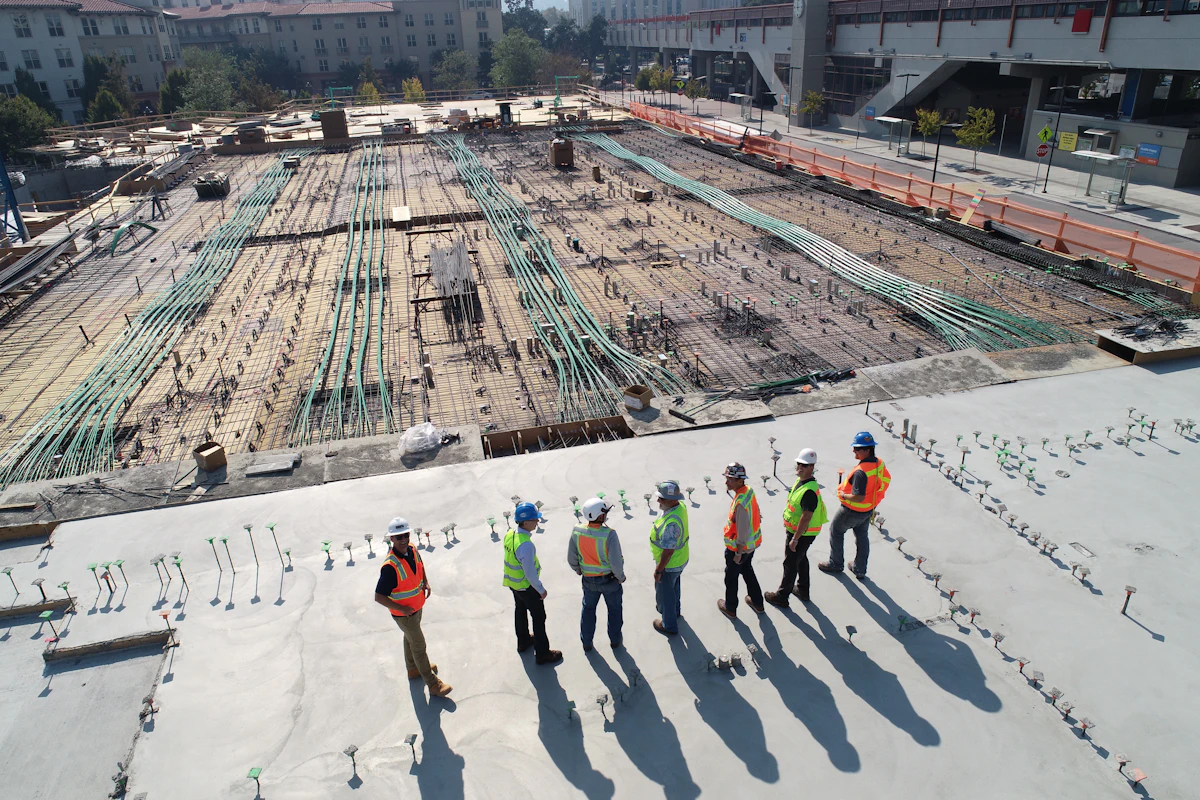
The Supply Chain Revolution: From Linear to Modular Logistics
This construction method necessitates a fundamental restructuring of the traditional building supply chain. The linear model—multiple suppliers delivering raw materials to a single site for processing and assembly—is replaced by a modular, point-to-point logistics chain. The primary flow becomes: centralized fabrication facility -> transport -> minimal on-site assembly and connection. This shift has profound long-term implications for the construction industry.
The model promotes the development of centralized hubs of manufacturing excellence. These hubs can service projects across wide geographic areas, achieving economies of scale and deepening technical expertise. On-site operations are simplified to foundational work—such as installing the steel stilts—and the mechanical connection of pre-fitted modules. This creates a more resilient supply chain. A modular, containerized system is less vulnerable to local material shortages or sudden price spikes for bulk commodities, as the majority of value is added in a stable factory setting before shipment.

Terrain as a Catalyst: Why Challenging Sites Drive Innovation
Difficult landscapes, such as mountainous regions, act as a forcing function for construction innovation. The logistical challenges of accessing remote sites, the environmental sensitivity of rugged terrain, and the structural demands of steep slopes render conventional methods inefficient and often ecologically damaging. The Lebanese retreat exemplifies how such constraints drive adoption of efficient, lightweight, and minimally invasive techniques.
The strategic use of steel stilts is a critical component of this terrain response. The stilts perform multiple functions: they minimize ground impact and site disturbance, bypass the need for extensive excavation and grading, and provide a stable, level platform for module placement on uneven ground. This approach preserves the natural topography and reduces the project’s environmental footprint. The modular steel capsule system itself is inherently suited to such sites. Its lightweight nature reduces the structural load, and the ability to transport discrete units allows for assembly in locations inaccessible to continuous construction activity.
Sustainability and Scalability: The Durable Future of Discreet Modules
The sustainability argument for prefabricated steel construction extends beyond reduced site disturbance. The factory-controlled environment enables precise material cutting, leading to significant waste reduction compared to on-site construction. The durability and longevity of steel as a primary structural material contribute to the asset’s lifecycle performance. Furthermore, the inherent modularity of the system offers a clear path for future adaptation, expansion, or even deconstruction and relocation, challenging the permanence and waste associated with traditional buildings.
The scalability of this model is its most compelling feature for global markets. The same principles applied to a single mountain retreat in Lebanon are directly transferable to larger-scale applications. This includes multi-unit residential developments in urbanizing emerging markets, workforce housing for remote industrial or energy projects, and rapid-deployment facilities for healthcare or education in post-disaster or development contexts. The system provides a blueprint for delivering high-quality, durable infrastructure in environments where traditional construction is too slow, too expensive, or too unreliable.
Conclusion: A Blueprint for Resilient Development
The Lebanese mountain retreat project demonstrates that prefabricated steel capsule construction is an exercise in systemic risk management and logistical optimization. The analysis indicates that its adoption is driven not by aesthetic preference alone, but by a rational economic logic suited to conditions of volatility, scarcity, and geographic challenge. The method’s core advantages—speed of deployment, quality control, supply chain resilience, and reduced environmental impact—align with the pressing needs of both emerging markets and projects in remote regions globally.
The long-term industry prediction, based on this case study, is a continued bifurcation of the construction process. High-value, complex fabrication will increasingly concentrate in specialized industrial hubs, while on-site work will focus on foundation systems and the assembly of manufactured components. This shift promises greater predictability, efficiency, and resilience in building projects, suggesting that the modular steel capsule is less an architectural outlier and more a precursor to a new, more adaptive paradigm in global construction economics.